New school year. New friends. And sometimes, new behaviors.
Maybe your kid or teen suddenly talks differently, has new interests, challenges rules they once followed, or seems more concerned about what friends think. Especially with teens, parents may feel like the kid they knew changed almost overnight.
It's easy to immediately think: "Those friends are a bad influence."
But before criticizing the friends or banning the friendship, take some time to understand what's happening.
Try This Instead
Start with curiosity rather than accusation.
Instead of: ❌"Ever since you started hanging around them, your attitude has changed."
Try: ✅"I've noticed some things seem different lately. How are things going with your friends?"
Or: ✅"Your friends seem really important to you. Tell me a little about what you like about hanging out with them."
Then listen.
Your kid or teen's answer may tell you much more than a confrontation will.
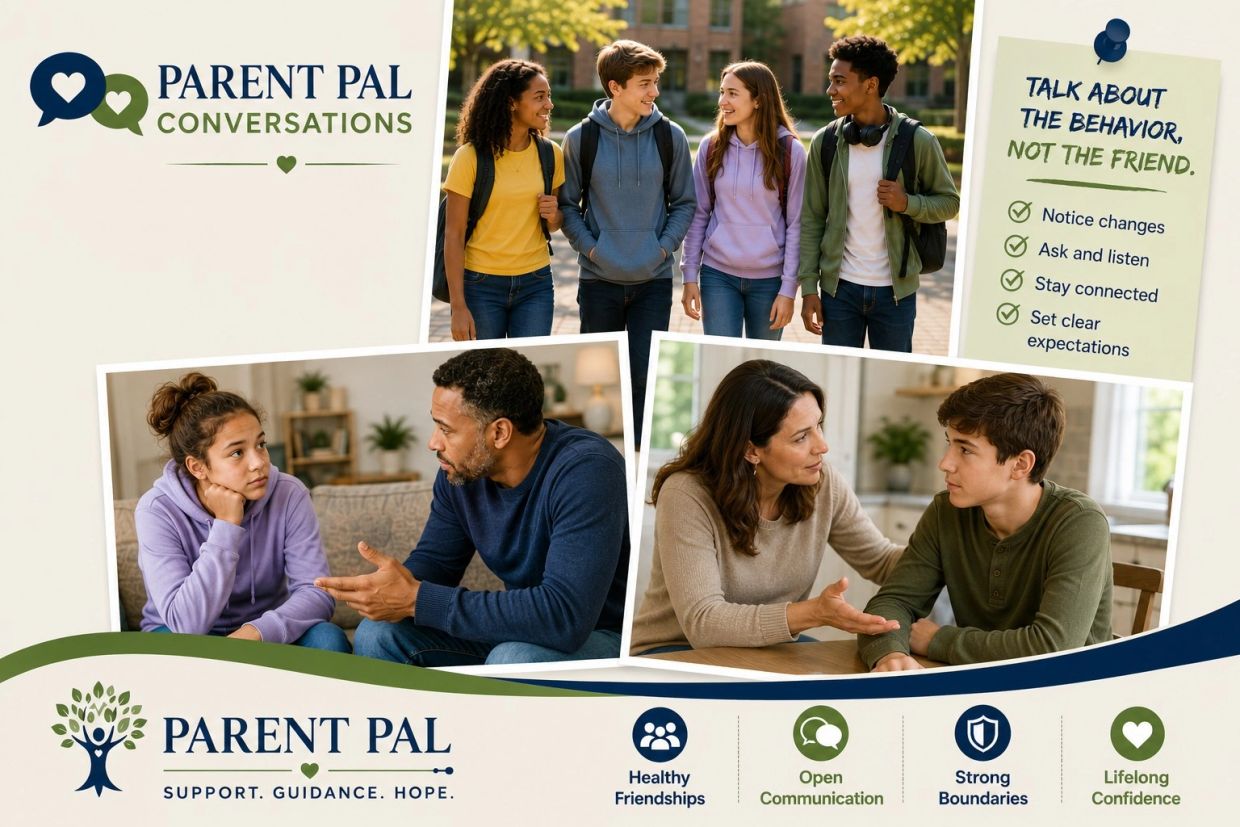
Talk About the Behavior, Not the Friend
If you're concerned about something specific, focus on what your kid or teen is doing rather than labeling another kid as a "bad influence."
Try: "I've noticed you've been coming home later than we agreed. Let's talk about what's going on."
Rather than: "I don't want you hanging around those kids anymore."
This keeps the conversation focused on your family's expectations and gives your kid or teen an opportunity to explain what's happening.
Why It Helps
Friends become increasingly important as kids grow, particularly during adolescence. Remember? You were a teen once.
Peer relationships can influence interests, language, clothing, attitudes, and behavior, but influence isn't always negative. Kids and teens are also experimenting with independence and figuring out where they fit. When parents and caregivers immediately criticize friends, kids and teens may become defensive or stop sharing information altogether. Staying curious helps keep communication open while still allowing parents and caregivers to set appropriate boundaries.
Pay Attention to Bigger Changes
A new hairstyle, slang, music preference, or clothing style may simply reflect your kid or teen exploring who they are.
Other changes deserve closer attention, especially when several happen together. For example:
- A sudden drop in school performance
- Repeatedly breaking important family rules
- Significant changes in mood or behavior
- Abandoning longtime friends or activities
- Secrecy that is unusual
- Risky or unsafe behavior
The goal isn't to monitor every change, bu to butknow your kid or teen well enough to recognize when something feels meaningfully different.
Remember
You won't always get to choose your their friends. But you can help them learn how to choose healthy relationships, handle pressure, make decisions, and stay connected to their own values. Those skills will matter long after you're no longer able to decide who they spend time with.
Parent Pal Takeaway
When your kid or teen's behavior changes, don't start by blaming the friend. Notice. Ask. Listen. Then address the specific behavior that's concerning you. Keeping the conversation open gives you something extremely valuable: a better chance that your child will continue talking to you about what's happening in their world.
Need more personalized guidance?
If you're concerned about changes in your kid's or teen's behavior, friendships, or decision-making, Parent Pal can help you think through what's happening and identify practical ways to respond while keeping communication open.